
Urban Theory built one of the most visually distinctive acts on the internet out of a dance style most people had never heard of, a small city on the Italian Riviera, and a pandemic that left them with nothing but time. The world caught up eventually.
The act doesn’t make sense from stage level.
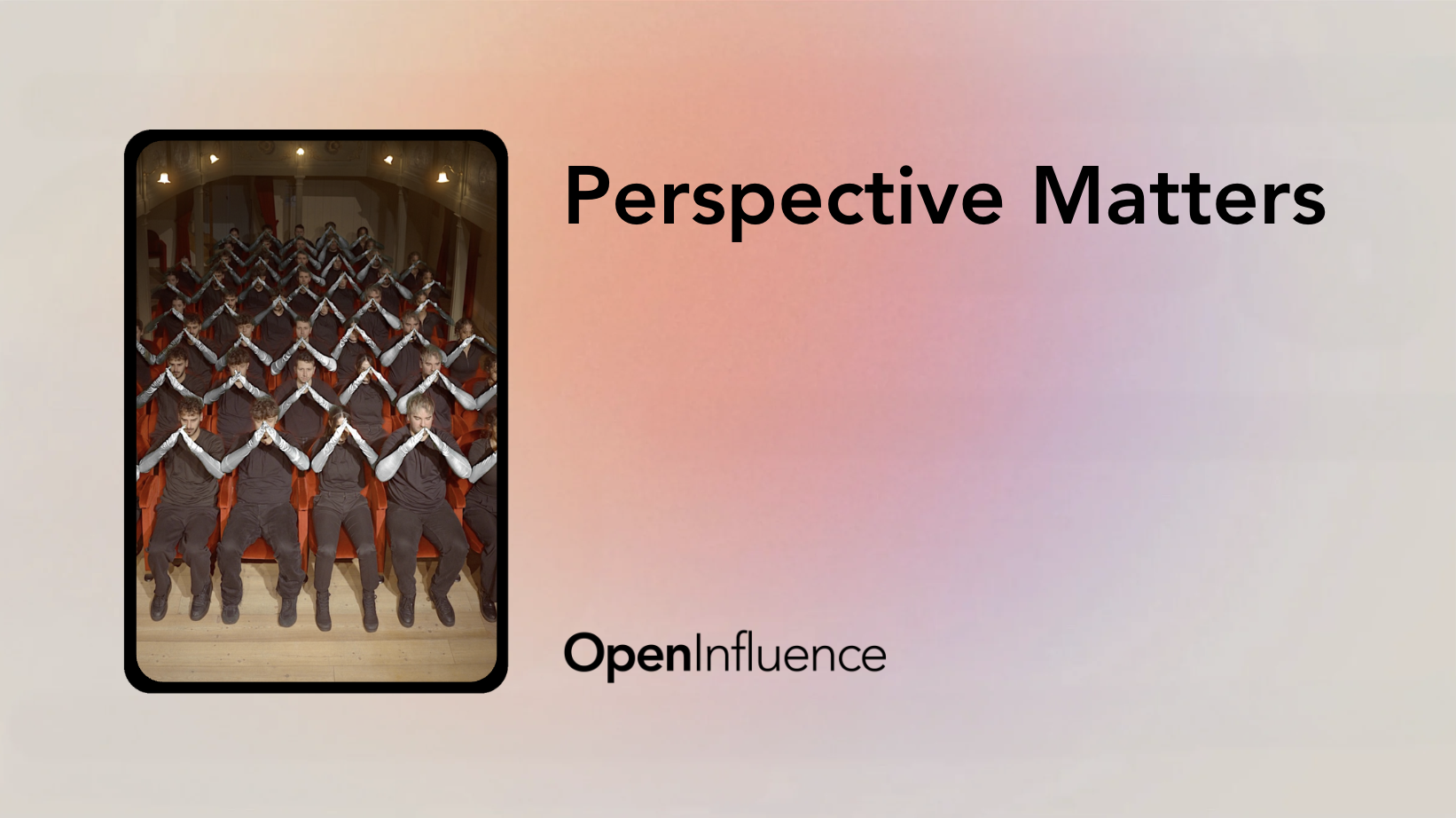
That’s not a criticism — it’s the whole point. When Urban Theory performs, the angles are wrong, the geometry is incomplete, the shapes don’t resolve. You have to look at it from above, or through a screen, to see what’s actually happening: six bodies moving in exact synchrony, arms and hands building geometric figures in the air, a kaleidoscope assembled from human limbs.
Urban Theory specializes in tutting, a hip-hop-rooted style where dancers form synchronized geometric angles with their arms and hands. It is precise, demanding, and almost impossible to fake — one off-angle elbow collapses the illusion entirely. And it is, by design, a form built for the camera. Not the stage. Not the theater. The feed. Laughing Squid
That instinct — that their art is native to screens — is what turned a six-person crew from a small town on the Italian Riviera into one of the most-followed dance acts on the planet. It did not happen overnight, and it did not happen easily. It happened because COVID closed every door they had, and they went looking for a window.
Sanremo, Before Everything
The group’s name comes from a dance school in Sanremo, Liguria, a coastal city best known outside Italy for its annual music festival. Jessica De Maria, the founder, was a teacher there — that’s where the members met. In the early days they called themselves Calypso, a name that didn’t survive contact with ambition.
They wanted to create something that set them apart from other hip-hop dancers. One member, Davide, already had a passion for tutting and proposed they focus on it. The intention was modest at first — get some television experience, try something different. Then they went on Italia’s Got Talent and earned the Golden Buzzer from Olympic swimmer Federica Pellegrini. The audience responded immediately. They understood they were on the right path.
What followed was the life of working artists: touring, performing, building a name through stages rather than screens. Italian showman Fiorello invited them to join the cast of Viva RaiPlay! for three months in Rome — their first real professional work experience, the moment dancing became a career rather than a calling.
Then, in 2020, everything stopped.
The Quarantine Video
“At first there was a kind of bewilderment, as for everyone else,” Jessica has said of those early lockdown weeks. The performance venues closed. The touring schedule evaporated. Six dancers from Sanremo sat with their art and nowhere to put it.
They turned to TikTok. During quarantine, with more time on their hands, they decided to invest more in social media — TikTok was exploding at that moment. They started posting consistently. A few months in, a video using their hands went viral.
Millions of views. Then more millions. Then the running started, as Davide and Lorenzo describe it — that feeling of momentum that, once it begins, demands you keep pace with it.
The content pivot wasn’t a rebrand. It was a revelation: the things that made tutting difficult to fully appreciate in a theater — the precision, the geometry, the need for the right angle — made it extraordinary on a phone screen. The camera could go anywhere. It could hover above, look straight down, catch the exact moment a shape clicks into place. Urban Theory had been making visual art all along. They just found the right frame for it.
The Screen Is the Stage
The numbers that followed are hard to absorb as a progression because they moved so fast. By 2023, the six dancers from Sanremo had reached 20.3 million followers on TikTok, 3.5 billion views, and over 300 million likes across Facebook, Instagram, and TikTok. That figure has since climbed past 21 million on TikTok alone.
They have appeared on Italia’s Got Talent, The Tonight Show, and the Eurovision Song Contest. They have collaborated on campaigns for Samsung, Coca-Cola, Disney, and Sony Music. In 2025, they performed on America’s Got Talent Season 20 — an audition that required a screen mounted above the stage so the judges could actually see what was happening. Simon Cowell pushed hard to save them after a split decision, convincing Howie Mandel to change his vote as the audience chanted.
And they performed at Coachella 2025, rehearsal footage of which appeared on their TikTok under their permanent caption: Perspective Matters.
That phrase is their whole philosophy. What you see depends entirely on where you’re standing — and Urban Theory has always known exactly which angle to give you.
The Sanremo Paradox
Here is the thing that surprises people: the United States, Brazil, and India are the countries where Urban Theory is most famous. Italy ranks fifth.
They are internationally recognizable creators who live in the same small city where they met. They opened a studio in Sanremo rather than relocating to Milan or London or Los Angeles. When asked why, Lorenzo answered plainly: it was never a choice, it happened naturally. Being successful on social media means you can be everywhere. You don’t need the capital city. The capital city comes to you.
They describe themselves as nomadic — “packed suitcase” people — but Sanremo is the base, the place they return to when the tour ends and the brainstorming sessions begin. Every day in Italy, when they’re there, involves time in front of a mirror working new choreographies, and time at a table planning content, managing clients, figuring out what comes next. The discipline is real. The hometown is a choice.
Los Angeles, for its part, was a revelation when they finally arrived. Walking the Walk of Fame and Venice Beach, people stopped them on the street because they recognized them — something that had never happened in Italy. In the creator economy, fame doesn’t always map to geography. You can be a household name in Los Angeles while being relatively unknown in your own hometown. Urban Theory has made peace with that inversion. If anything, it amuses them.
What They’re Building Now
The interview catches Davide and Lorenzo at the Opening Ceremony of their LA trip, mid-momentum, mid-sentence — the energy of people who have been going one hundred miles an hour and haven’t stopped long enough to notice. “Creating foundation,” one of them says, and then trails off, because the thought is bigger than the moment allows.
That’s the project: not just the next video, not just the next tour, but something more structural. A dance act that became a content operation. A content operation that kept its feet on the stage. A crew from a festival city on the Ligurian coast that turned a pandemic into a platform and a platform into a global career, without ever needing to leave home.
Jessica still runs the dance school she opened in Sanremo. There is a side project called Black Widow, an all-women dance group for which they choreograph. The next generation of tutters is already in training, in the same city, in the same rooms where the idea started.
Perspective matters. It always has.
Six people from Sanremo, a dance style invented in New York, a camera that knows exactly where to point. That’s the whole story, and somehow it amounts to 3.5 billion views and a stage at Coachella and Simon Cowell fighting for your survival on live television.
Urban Theory didn’t find the internet. The internet found the angle.
SOCIAL HANDLES: TikTok: @urbantheory_ Instagram: @urbantheory_ YouTube: Urban Theory
Watch their full interview here!