
The Seattle Seahawks may have taken home the trophy in Super Bowl LX, but for marketers, the real competition extended far beyond the field.
With roughly $8 million required for a 30-second spot, the Super Bowl remains the most expensive and visible stage in advertising. Yet this year reinforced a growing reality: Brands are no longer relying solely on broadcast scale to win cultural relevance.
That price tag is prohibitive for many companies. Creator marketing, however, provides a more flexible and often more effective way to align with the most important day in advertising. Even brands that can afford a traditional Super Bowl ad increasingly complement or replace it with creator strategies designed to deliver authenticity, precise targeting, and sustained community engagement.
The National Football League itself embraced this shift, bringing more than 160 creators to the San Francisco Bay area as part of its broader fan engagement strategy. Importantly, many of those creators operated outside traditional sports categories, spanning fashion, food, and lifestyle—underscoring the fact that the Super Bowl functions as a cultural moment, not just a sporting event.
“Creators have been a core part of our fan engagement strategy for many seasons,” NFL Senior Vice President of Global Influencer and Content Marketing Ian Trombetta said. “We have the unique opportunity to give creators the key to one of the biggest cultural events in the world.”
Game Time for Brands and Creators
Open Influence joined the Big Game roster, partnering with Ulta Beauty to bring its Super Bowl Suite to life through immersive experiential design and creator-led storytelling. The activation blended beauty, culture, and community into a high-touch brand experience designed to travel far beyond the physical space.
Across the industry, brands leaned into similar strategies.
After eight consecutive years of traditional Super Bowl advertising, Doritos pivoted to a creator-led campaign anchored by Connor Wood and Dylan Efron, supported by more than 1,500 creators generating related content.
DoorDash redirected approximately $5 million into a creator-driven effort featuring Curtis “50 Cent” Jackson, Brooks Nader, Rob Rausch, and the significant others of both starting quarterbacks.
Uber Eats introduced a “Build Your Own Super Bowl Commercial” experience with Addison Rae and Amelia Dimoldenberg, while Whatnot partnered with MrBeast on a $1 million giveaway. Ramp amplified its look-alike contest through creator participation, extending a single activation into a shareable moment.
These were not side tactics: They were structural decisions.
As Maggie Reznikoff, Chief Client Officer at Open Influence, explains: “Creators were not just appearing in Super Bowl ads. They were embedded into how campaigns traveled, scaled, and stayed alive before and after the game. The creator role has moved from talent to distribution system and cultural translator.”
This reflects a deeper industry evolution. Creator strategy is increasingly integrated upstream into campaign development alongside media and creative, signaling that brands now see creators as a channel with creative authorship, not simply as paid talent.
Doritos’ long-running Crash the Super Bowl legacy demonstrates this model clearly. The television spot serves as the climax, but social creators preview, rally, and prime audiences in advance. The audience arrives warm, not cold.
The takeaway for marketers: The 30-second spot drives scale. Creators drive frequency, context, and cultural translation.
Which Ads Resonated
While creators expanded the ecosystem, the broadcast still delivered moments that broke through.
According to rankings including the USA Today Ad Meter, iSpot, EDO, and X BrandRanx, Budweiser, Lays, the NFL, Dunkin’, Apple Music, Ring, and Pepsi Zero Sugar were among the top performers.
Humor, positivity, and cultural familiarity remain powerful tools. But intentionality made the difference.
Maria A. Rodriguez, VP of Communications and Marketing at Open Influence, pointed to Dunkin’ as a standout. “The use of familiar, beloved characters tapped into nostalgia in a way that felt genuinely fun, rather than forced,” she said. “It wasn’t nostalgia for nostalgia’s sake: It was rooted in smart storytelling and cultural fluency.”
She also cautioned that nostalgia can dilute when overused, adding, “When similar cues appear across multiple ads, the impact starts to fade.”
Budweiser succeeded for a different reason. “In a night full of loud moments, Budweiser’s emotional restraint made it memorable,” Rodriguez noted. “It reminded viewers why the brand has endured for decades.”
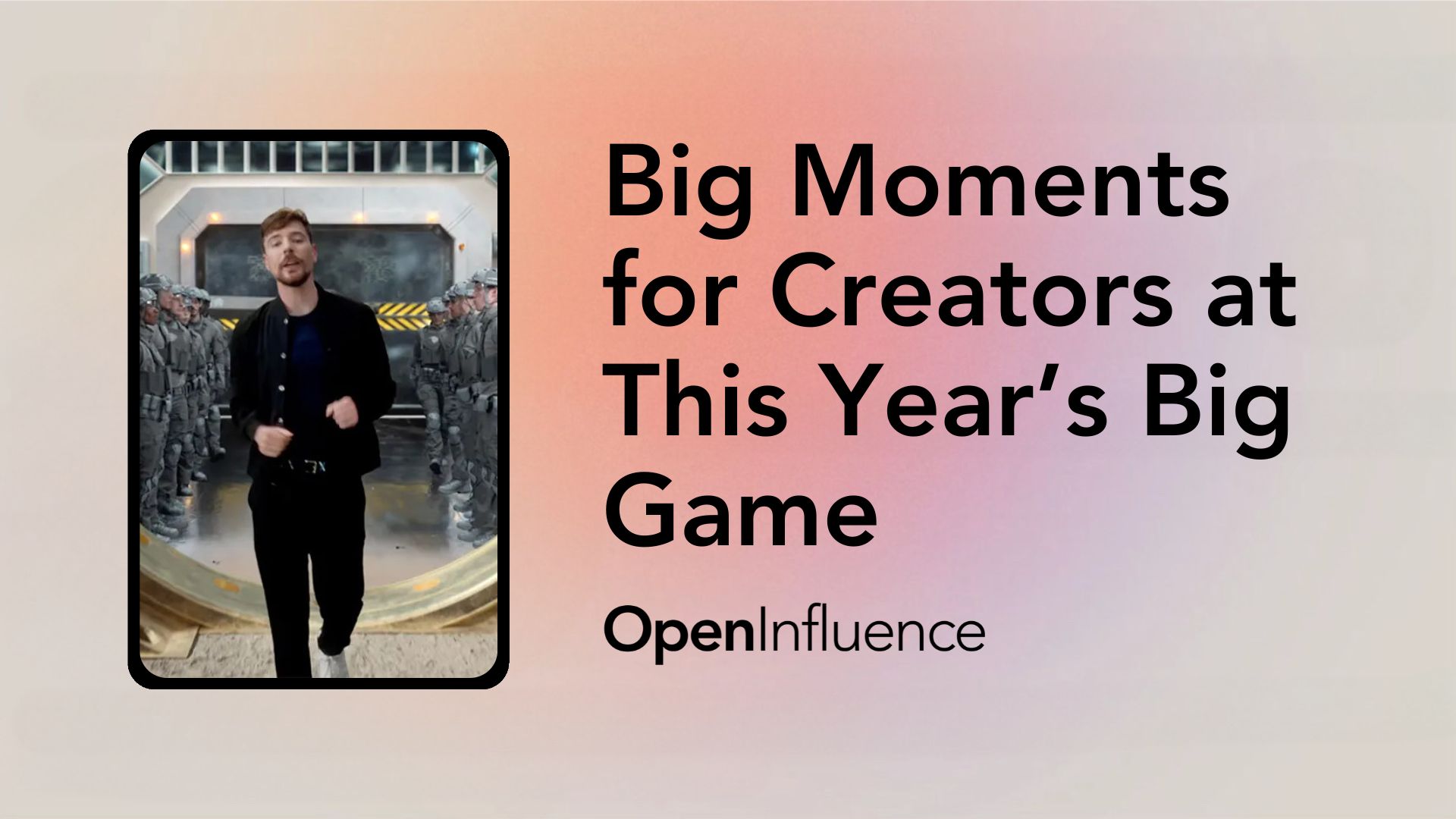
Perhaps one of the most notable signals of the night was Salesforce’s partnership with MrBeast.
“Seeing a traditionally B2B (business-to-business) brand show up in a creator-forward, culture-driven way reinforces that creators aren’t just for consumer brands,” Rodriguez added. “Creative storytelling matters just as much in B2B.”
Even fintech brands like Ramp and Squarespace leaned into narrative and humor over product-heavy messaging, demonstrating that creativity is becoming a differentiator across categories.
Where Brands Fell Short
Not every effort resonated.
Cryptocurrency exchange Coinbase finished last on the USA Today Ad Meter, and AI brands experienced mixed results. Alexa+ and Google Gemini performed steadily, while OpenAI and Anthropic generated more polarized reactions.
Debra Aho Williamson of Sonata Insights noted that AI ads continued to emphasize practical use cases and humanization, similar to last year’s approach.
Rodriguez also observed a missed cultural opportunity in casting.
“It felt limiting to see the same Latina celebrity appear in multiple commercials,” she said. “Latino culture is shaping the mainstream conversation right now. There is tremendous depth in Latino talent. Expanding that representation would reflect the moment more authentically.”
Pharma’s Cultural Turn
Another notable evolution came from pharmaceutical brands.
Sierra Moore, Senior Creative Director at Open Influence, highlighted campaigns such as Detect the SOS and Novartis’ prostate cancer awareness spot.
“You can’t educate if you don’t earn attention first,” Moore said. “By leaning into culture and entertainment, preventative health was made to feel human and accessible.”
She sees opportunity for pharma brands to extend this approach through creator partnerships that allow these messages to live in everyday feeds and conversations.
The Halftime Show as Cultural Blueprint
The halftime performance reinforced the broader theme of cultural integration.
Bad Bunny headlined with a primarily Spanish set that energized global and Latino audiences, while appearances from Lady Gaga and Ricky Martin created cross-generational resonance.
Rodriguez described the performance as immersive and intentional, saying, “It leaned fully into culture and celebration. When artists bring their full identity to the biggest stage, audiences respond to energy and honesty more than spectacle.”
Looking Ahead
Will creators continue to play an expanded role in Big Game marketing? All signs suggest yes.
Super Bowl LX demonstrated that the broadcast remains powerful, but it is no longer sufficient on its own.
The brands that sustained impact treated the game as part of a longer attention cycle. They built creator ecosystems across phases rather than relying solely on a hero film.
Creators are no longer influencer line items: They are campaign infrastructure.
For marketers planning ahead, the question is no longer whether to integrate creators into cultural tentpoles: It is how early, how intentionally, and how structurally they are built into the system.
Open Influence’s team stays on top of the latest trends and is here to help you maximize your creator campaigns. Open Influence is a leading global creator marketing agency dedicated to creating engaging campaigns.