
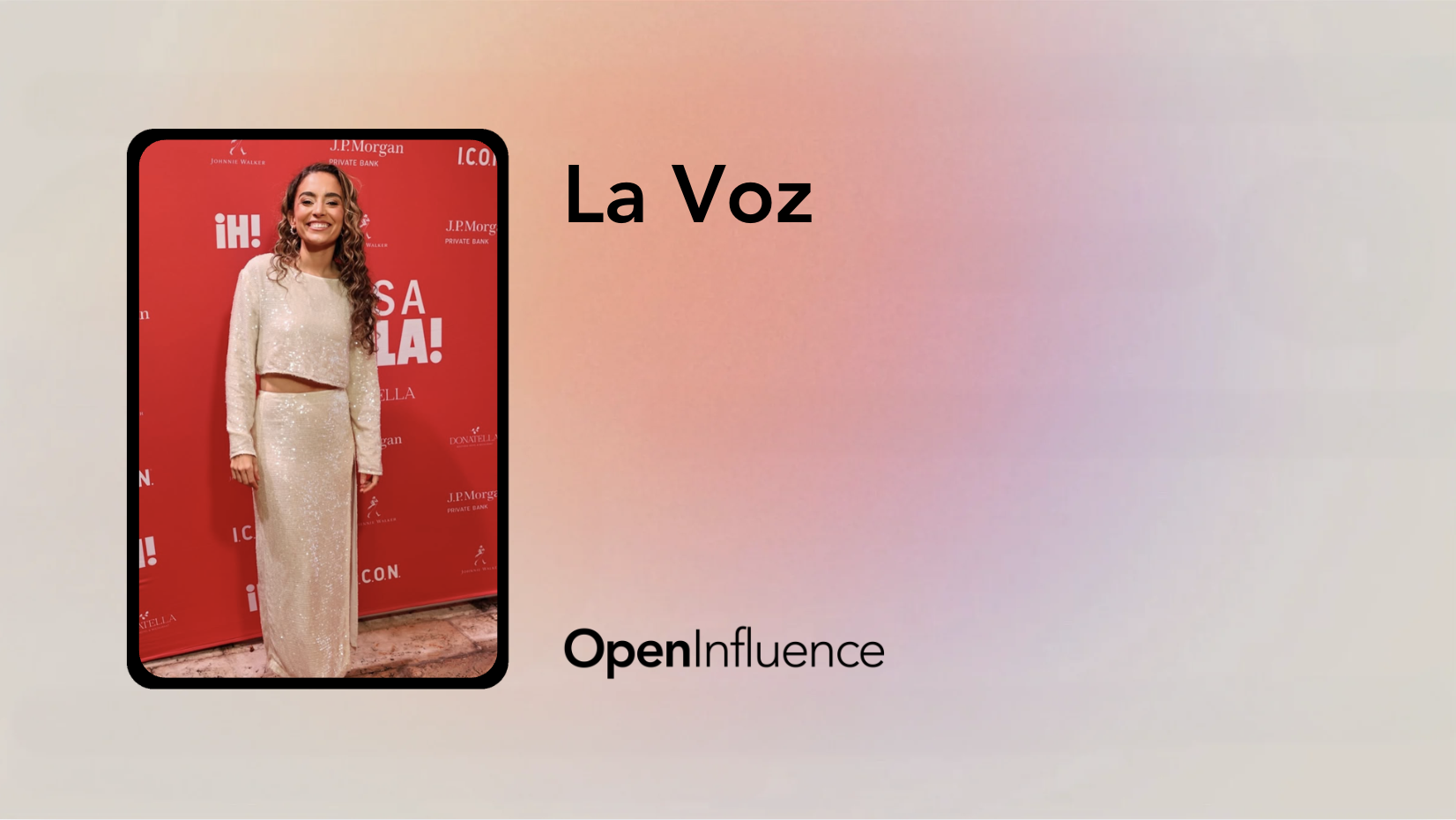
Isabella Echeverri spent her career using her feet to win games. Then she realized her voice could change the game entirely. She never looked back.
There is a word Isabella Echeverri heard as a girl that she has never forgotten.
Marimacha. Tomboy. The slur they threw at the kid from Medellín who wanted to play football with the boys. The one her mother answered the day Isabella came home crying with six words that became the spine of everything: ¿Amás el fútbol? Entonces seguí, con la cabeza en alto.
Do you love football? Then keep going, with your head held high.
She kept going. All the way to the Colombian senior national team, to Sevilla FC, to a Champions League campaign, to a Copa América goal with her family in the stands. All the way to a stage in Times Square, at the center of the biggest sporting event on earth, hosting the FIFA 2026 World Cup draw with the whole world watching.
Her mom and grandmother watched from home. The same two women who used to pull her out of school to catch Champions League matches.
The girl they called marimacha became the face of the game she was told wasn’t for her.
The Day the Platform Began
For a long time, Isabella didn’t think of herself as having a platform. She was a defender. Her job was to stop people from scoring.
Then came 2019.
Alongside her best friend and teammate Melissa Ortiz, Isabella stood up and said it out loud. Menos miedo, más fútbol. Less fear, more football. They took on the Colombian Football Federation directly, accusing it of gender discrimination — unequal pay, inadequate preparation, a systemic devaluation of the women’s game. When you speak against the people who decide whether you ever play again, you are betting your career on the idea that the truth matters more than the next call-up.
She never received another call-up to the national team.
“That year changed Colombian football forever,” she says. “It changed our lives too.” She pauses, and then says something that reframes the entire sacrifice: “I was never called back to the national team. But it was the best moment in my career.”
That is the moment Isabella Echeverri understood what her platform actually was. Her feet could win games. Her voice could change the game for the girls coming after her. The platform was never the goal. It was what she picked up the day she realized that staying quiet was costing more than speaking.
From the Pitch to the Camera
What most people don’t know about Isabella Echeverri is that she was preparing for what came next the entire time she was playing.
She studied through her professional career — earning master’s degrees in business administration, marketing, and sports entity management, plus a UEFA program for international players. Her stepfather had told her early: use football as the vehicle to educate yourself, so that one day you can help shape the industry itself. That advice stuck. She never assumed the ball would feed her forever.
When retirement came, she still had no map. “I had been a pro athlete my whole life,” she says. “That was my identity, my schedule, my body, my purpose. Then it was over, and nobody hands you a map for what comes after.”
What came after was a Telemundo broadcast booth at the 2023 FIFA Women’s World Cup. And then an Emmy.
She had never imagined herself in front of a camera. But from day one, it felt natural — and it took her a while to understand why. “Being in front of a camera is closer to being a pro athlete than you could ever imagine,” she says. “The same nerves before the whistle. The same need to perform live with no second take while you stay calm on the outside. The same preparation nobody sees.”
Football had trained her to read a moment half a second before it happened, and to trust herself when the red light came on. That, it turned out, was the whole job.
“The Emmy made me realize that people don’t want someone perfect,” she says. “They want someone they can see themselves in.”
“My feet could win games. My voice could change the game for the girls coming after me.” — Isabella Echeverri
The Market Nobody Is Building For
Ask Isabella about creator marketing and geography and she doesn’t give you a theory. She gives you a diagnosis.
“Football looks crowded,” she says, “because everyone is fighting over the exact same person. The hardcore fan. That space is completely saturated.” But the sport has changed. The audiences have changed. And the way you reach them has changed too.
She starts with women. “We are a huge part of football that almost no one is building for. Massively underdeveloped. And we are the ones making the purchasing decisions at home.” She cites the research. She points to Latina women specifically. “The audience is already there. The industry just hasn’t caught up yet.”
Then she gets to geography, and this is where the diagnosis gets precise. “Latino is not one market,” she says. “A Colombian abuela in Medellín, a Mexican American kid in LA, and a Spaniard in Sevilla all love this game — but they share almost nothing about how they live it.”
The first mistake brands make: they translate when they should transcreate. “A literal Spanish version of an English campaign sounds like a tourist talking slowly and loudly. People feel it right away and they tune out.”
The second: they chase reach. “A million strangers scrolling past you is worth less than ten thousand people who trust you.”
The third, and the one she returns to with the most conviction: they still think in one-off transactions. “Trust is the real currency today. You don’t build it with a single post and a flat fee. People can tell when someone shows up once, takes the money, and disappears. The brands that actually work choose a voice and grow with it over time. That patience is what moves people to act.”
Being the Mirror
Her media kit describes her as un espejo para las mujeres latinas. A mirror for Latin women. It is specific and powerful positioning, and she lives it with the consistency of someone who has thought carefully about what it costs and what it’s worth.
“The most important lesson my career gave me is this,” she says. “Being aligned with your values is the most important thing there is. It is freedom. And when you actually live that way, doors and opportunities open around you. Not in spite of it. Because of it.”
What she wants the people who follow her to feel is simple: that it is never too late to be awkwardly, fully yourself. “As little girls we get put in a box,” she says. “There is nothing wrong with pink and Barbies. But life is so much bigger than the box, and dreams look completely different from one person to the next.”
Being a mirror doesn’t mean being aspirational in the polished, unattainable sense. It means showing up every day with enough honesty that someone else can look at the reflection and think: then I can do that too. “Maybe that is playing in a World Cup or going to the Olympics,” she says. “Maybe it is being an astronaut or an F1 driver. Whatever she wants.”
She comes back to her mother. To the day she came home crying with a word thrown at her by someone who didn’t understand what she was becoming. ¿Amás el fútbol? Entonces seguí, con la cabeza en alto.
“I want to be that voice for the next girl,” she says. “Before she even knows she needs it.”
Isabella Echeverri has a FIFA legend title, an Emmy, four master’s degrees, and a stage at the biggest sporting event in the world. She is also, still, the girl from Medellín who got called marimacha for playing with the boys.
Both things are true. Both things are the point.
“Everything I build,” she says, “is so the next little girl with big dreams has somewhere to land.”
The chapter she hasn’t written yet is the one meant to outlive her. She has a very clear sense of what it looks like. And she is, characteristically, already working on it.
Con la cabeza en alto.
SOCIAL HANDLES: Instagram / TikTok: @isabellaecheverri11 X: @isaceche11