
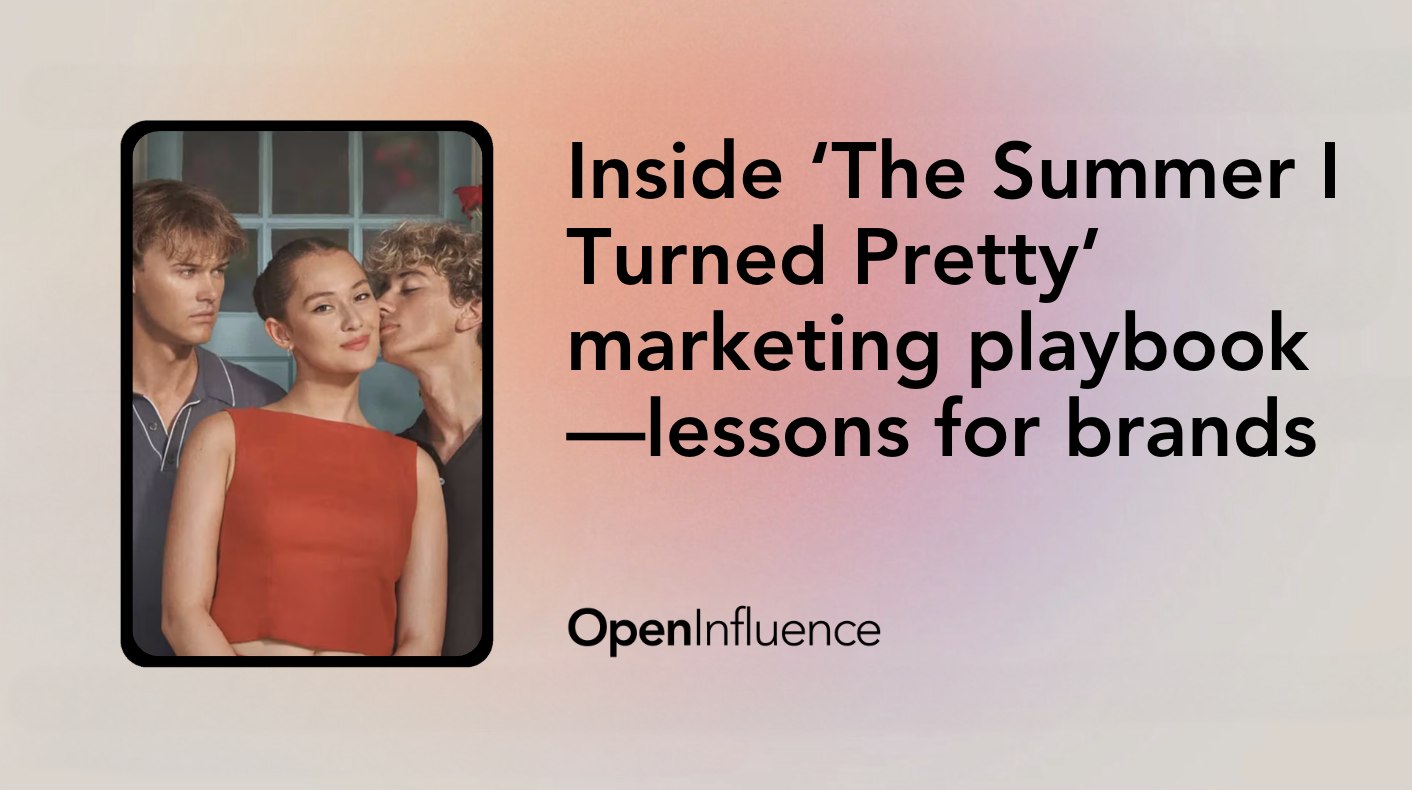
While a clear-cut song of the summer never materialized this year, “The Summer I Turned Pretty” has unequivocally emerged as the defining TV series of summer 2025.
“The Summer I Turned Pretty” has turned into the buzziest brand playground of the season, with everyone from the NFL to the United States Postal Service taking sides in the show’s central love triangle, declaring themselves “Team Conrad” or “Team Jeremiah.”
What sets this season apart—and why marketers should care—is how it created a steady stream of brand-ready trends. From LaCroix and Delta weighing in on the show’s central love triangle to Mondelēz International turning its Sour Patch Kids and Swedish Fish into rival “teams,” “The Summer I Turned Pretty” has become a case study in how TV fandom can offer brands reliable, repeatable ways to show up in culture.
The third and final season of the Prime Video series, which follows the melodrama that unfolds as brothers Conrad and Jeremiah Fisher compete for the affections of their childhood friend, Isabel “Belly” Conklin, has generated a steady outpouring of social media conversation since its July 16 premiere. Nearly 200,000 posts using the hashtag #TheSummerITurnedPretty have been shared in the past month on TikTok alone, collectively generating 2.9 billion views, according to data from ViralMoment Intelligence, a cultural insights agency.
This season is the first time the show “became a real topic of conversation” between We Are Social and its clients, said Dana Neujahr, managing director of the social and creative agency. That’s partly due to a growing audience and its universal popularity across multiple age cohorts, she said.
Season 3 amassed 25 million global viewers in its first week on Prime Video, up 40% from the Season 2 premiere in 2023, according to Amazon. It’s also become the streamer’s most-watched TV season among 18- to 34-year-old women. The series finale is set to debut Sept. 17.
“When you appeal to Gen Z and millennials, the door opens for the amount of brands that can jump into something like this,” Neujahr said. Millennial nostalgia is also back in the pop culture zeitgeist more broadly, she added—as evidenced by the recent spate of Y2K-inspired marketing campaigns and events such as the Backstreet Boys’ residency at the Las Vegas Sphere.
Read the full article here.